

Federal and state laws prohibit discrimination, harassment or retaliation in the housing market, workplace, and when a business establishment provides goods or services. But do those statutory schemes apply or have any force in cyberspace?
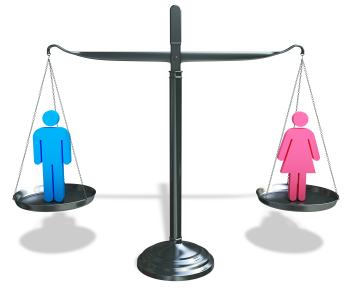 Here in Northern California, one online group inadvertently discovered that the courts have not yet answered that question. The circumstances that brought the issue to the forefront also caused an online forum designed for and utilized by mothers to implode.
An online forum owned, operated by, and designed for mothers had, for two years, been the site of discussions about parenting, play dates, intimate thoughts about husbands, breast feeding, post partum depression, and sex among its 361 members. Until, that is, five words were posted on that venue: “Hi all, I’m a dad.”
The uproar that followed was initially characterized by fairly benign comments like “I’m pretty uncomfortable with this” and admissions from some of the members that they wanted to welcome a male member, but were leery. “Not at the fact that you can read my personal ‘girly’ posts but at the fact that I have no idea who you are and could be some kind of pervert for all I know.”
However, the dialogue turned ugly. The forum owner admitted that she and the moderators were “very embarrassed by the way it went,” with many members exhibiting behavior that was “more aggressive than the type of attitude that we promise on our site.”
In fact, the discussion became so heated that the forum was closed. Undaunted, some of the former members launched a private discussion board and continued the conversation. There, some women complain that they lost a safe, welcoming place where they could find companionship, solace, and advice from other women. They argue that opening such an online forum to male participants defeats its purpose and robs them of the opportunity to express their thoughts and feelings with women who share similar life experiences and emotions.
Others, however, were appalled that a segment of their membership engaged in hate speech directed toward the new male member. “The bottom line for me is not being able to stand for any kind of prejudice . . . and that is what this is,” said one female participant.
Another woman queried whether online behavioral standards should be any different than in-person guidelines. “If we were all having a playdate and the guy joined in with his daughter would you confront him that way verbally? I doubt it,” she wrote.
The internet is still, in many ways, an untamed legal frontier. Those who set up private forums accessible only to members have the power to exclude persons who do not meet their criteria for membership. But can they do so without being held liable for engaging in discrimination?
Although the courts have not, for the most part, addressed that question, the Ninth Circuit Court of Appeals did conclude in April 2008 that Roommates.com could be found liable of violating housing anti-discrimination laws by requiring users to create a profile disclosing their gender, sexual orientation and whether or not they would bring children to live with them in the housing accommodations advertised on that site. Users were barred from viewing listings that did not match their individual profiles. For instance, a gay male would not be notified of housing opportunities offered only to heterosexual males. The fair housing counsels who brought suit argued that the online service provided by the website was akin to that offered by real estate agent or broker who would inarguably be found liable for telling a client, “Sorry, sir, but I can’t show you any listings on this block because you are [gay/female/black/a parent].” The Court concluded that “[i]f such screening is prohibited when practiced in person or by telephone, we see no reason why Congress would have wanted to make it lawful to profit from it online.” (Fair Housing Council of San Fernando Valley v. Roommates.Com, LLC (Ninth Circuit Court of Appeals 2008) 521 F.3d 1157.)
Is the analysis the same with regard to online discussion forums which may be utilized only by members? In the case of the of the mothers’ forum in question, there were multiple levels of membership offered. The debate escalated when the gentleman in question purchased a “senior” membership granting him access to “private” areas of the site. Other members soon learned there is no such thing as true “privacy” on the internet and began frantically deleting their past posts and photographs that they deemed inappropriate for men.
As for the gentleman in question, he said he just wanted to network with other parents. The self-employed web programmer who spends his days online did not intend to incite controversy. “I never wanted to take up the cause of men joining women’s groups,” he told the local newspaper. “I don’t have the time or energy to do that. I just wanted to join a community of like-minded parents.” The verbiage used in his formal introduction to the group supports his stated intent. He described himself as the 30-year-old father of a “wonderful little girl” who loves to cook, shop and spend time with his family. He even offered other members his recipe for Thanksgiving turkey.
Until such time as the courts provide answers to the many questions raised by this and similar occurrences, website and forum owners should heed the advice of Harvard law professor John Palfrey, executive director of the Berkman Center for Internet and Society. “You pretty much have to treat them (Web sites) as public spaces. It’s not all that different than going into the town common and having a conversation, with one big difference being that it may be recorded for posterity. It may be a lot less private by virtue of the technology.”
Leave a comment or a link should you decide to write about this topic on your own site.

19 Comments
–beginning of my $0.02–
I don’t think there’s anything wrong with a group forming because they have certain things in common and want to a comfortable place to talk to others like themselves.
Ever since we were kids we were told to strive to be different, and many of us have found our own unique paths. But we also seek comfort in those similar to us. I don’t want a man coming into the womans bathroom, dressing room, shower room. And if a group of men get together to talk about man, or Dad, sort of things, then as a woman it’s just not my place and I need to find MY OWN path.
I say stop the discrimination and allow the woman to have their own place to themselves. Let the fathers have their own place. Let mothers and fathers have a place to all come together. Let them choose what kind of group they want to be and be in.
–end of my $0.02–
Thanks for hearing me out – and very interesting topic!! 🙂
Friggas last blog post..There Is A Bomb On This Bus
I think that guv’ment needs to keep out of the internet. they have managed to mess everything else they stuck their hands in!
It’s fair that the mothers on the forum felt violated and offended at the man being in their midst, but I don’t think it’s proper how hate speech and flames were directed at the poor man. Like he himself said, all he wanted was to join a community of like-minded parents, to provide a better home and future for his little girl. Now, nothing wrong in that is there?
I tend to avoid forums that cater to a specific group just because they all seem to end up too cliquey and superstitious of anyone not fitting their narrowly defined guidelines.
pussrebootss last blog post..Upcoming Reviews for the Week of May 19
That is kind of sad that a bunch of adults would act this way. Since forums are sort of like private clubs I think they do have the right to exclude people. After all, a man can’t join the Society of Women Engineers, and we don’t call that discrimination. However, it seems that in this case the intention of the forum owners wasn’t to exclude men and a guy, being a minority was just bashed by a bunch of paranoid women for no other reason than that he is not a girl.
The Bagladys last blog post..My Real Savings and Expenses Inventory – How We Manage to Save Nearly 50% of Our Income Every Month
I think that the Baglady is basically right….it is sad that people are acting this way.
And I believe there is space in our society for exclusion in some cases. For example, say you have a support group for women that are rape survivors. That needs to be a pretty selective group in order to be a helpful environment. You would not let just anyone join a group like that in defense of freedom and anti-discrimination. We have to be reasonable and that is where things get tricky.
Another example from my personal life is with AA meetings. They are open to anyone “with a desire to stop drinking,” but some have started exclusionary groups such as “AA for lawyers and judges” or “AA for those in the medical profession.” These are controversial because they deny some people who want help.
Certainly an interesting topic though…thanks for the post.
Great post! It really got me thinking!
I’m with BagLady — it is sad that adults behave that way.. She makes an excellent point!
Jennas last blog post..May I Have Your Attention, Please?
I think it is sad that people can’t take a hint and exclude themselves when there is a forum clearly labeled that it’s for WOMEN .
That man was clearly looking for trouble when he decided to join the discussion. No matter what he decided to “contribute” to that forum.
I agree that women need their places and men need theirs.
there are plenty of OPEN forums where all are welcome. At least thousands of them.
This guy was stirring up trouble from the time he went into the discussion.
it’s sad when things like this happened cos seriously, reli none of us can say things in the on9 world as a private or public things but I think tht both the forum and the father should have a nice talk b4 taking things so serious until the “Dad” looks like a bad person…
hi,
Me and my friends read this article,we gain a lot of information and we hope you ‘ll express some new ideas on different topics.
Its sad that a father with good intentions was bombarded like that. But like you said, the internet is still a very big blur in the legal aspect.
I am not sure if bloggers are able to speak of anything freely in my place..
A few years ago I was posting daily on a site dedicated to fertility issues, specifically a forum for women who had experienced an ectopic pregnancy. It was a place for me to go to vent feelings of pain and sorrow to people who had lived through the same experience. There was a separate forum for our partners, and there was a request made (and I believe respected) that everyone stick to their own forum. I don’t think that I could adequately described what a large part this played in the healing process for me and to be honest I was grateful to know that it was off limits to men. How do you have a forum or group or club without discrimminating? If I wanted to join an online group only for male bloggers would they have to accept me? I do however feel that there is no place for verbal attacks and insults and sometimes adults behave worse than children.
Joanne at frutto della passiones last blog post..A little lemon goes a long way
The wonders of the internet is that it allows a group of people with common thoughts and goals to form together. Now likewise in real life, if a group of such people were to be infiltrated by a member with a totally opposite behaviour and mindset, things, will eventually be messed up. What happened on the internet, would happen in real life anyway, so it isn’t anything special IMO.
The question is, did the forum clearly state that this was for mothers ONLY? Surely not, or the guy probably would not have joined in the first place.
It’s a form of prejudice to bar someone on the basis of sex, race, or ethnicity surely. Isn’t this what the whole thing boils down to? Prejudice?
nice point of view u posted here.
keep it up, i like to read people’s blog to know what is going around.
good luck
I think there is a subtle but very important difference between discrimination (where different behaviour is intended to harm) and simply wanting something to be set up in a particular way for a particular purpose.
The way things are going, we are not going to be left with any personal choice or freedom of action and speech. Where did common sense go.
hi,Thanks for post..
Me and my friends read this blog,we got a lot of information and we hope you ‘ll express some new ideas on different comments..
I don’t think it’s proper how hate speech and flames were directed at the poor man. Like he himself said, all he wanted was to join a community of like-minded parents, to provide a better home.